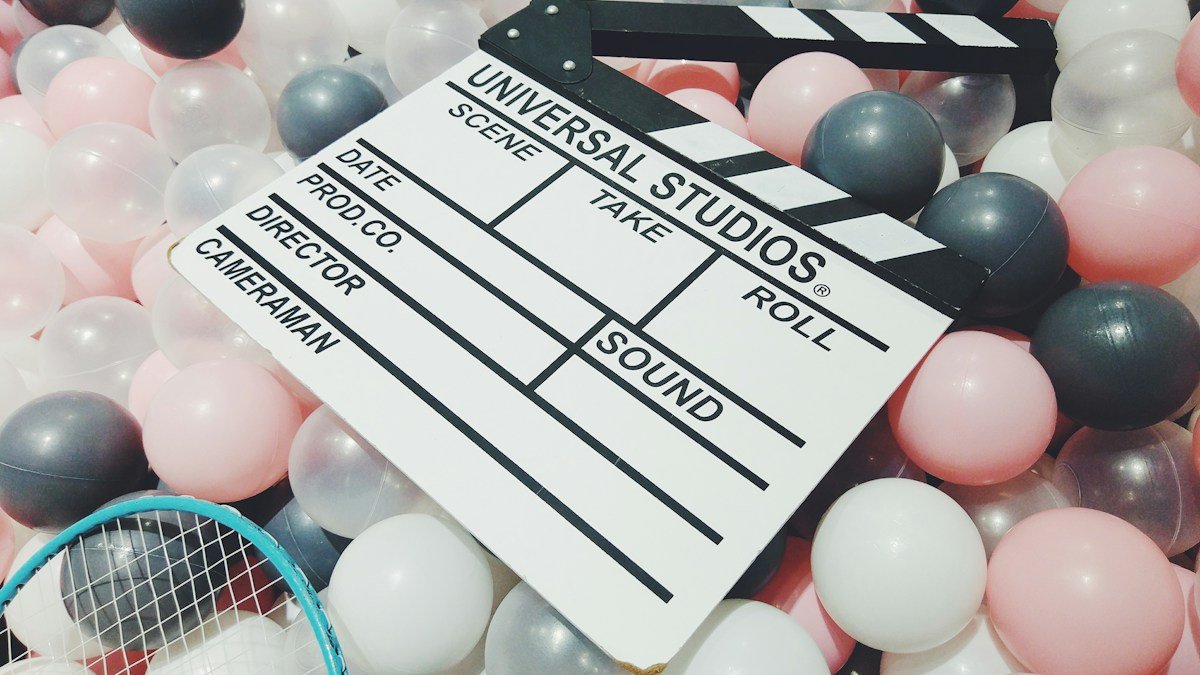
In modern cinema discourse, visual effects are frequently mischaracterized as a binary war between “pure physical practical effects” and “sterile digital CGI.” In reality, cinema history has always been a disciplined synthesis of physical engineering, chemical pyrotechnics, optical trickery, and digital image processing. Long before render farms existed, miniature builders and special effects coordinators were solving complex kinematic scale problems using high-speed cameras, physical gravity laws, and photo-realistic glass matte paintings.
1. The Physics of Miniature Photography: Defying Scale and Gravity
When an audience watches an exploding starship in Star Wars, a tumbling Batmobile in The Dark Knight, or the snow-covered fortress in Inception, they are frequently watching a miniature model (often called a “bigature”) built at 1/4th, 1/12th, or 1/24th scale.
However, shooting miniature models presents an unforgiving physical challenge: **Gravity does not scale down**. If a 1/16th scale miniature castle wall is blown up with miniature explosives at standard 24 frames per second, the falling plaster debris accelerates toward the floor at normal earth gravity (9.8 m/s²). Because the physical distance fallen is 16 times shorter, the debris hits the floor in one-fourth the real-world time. The audience’s brain immediately perceives the falling debris as tiny, destroying the illusion of colossal mass.
The Square Root Camera Speed Formula
To make miniature physical matter move with the slow, ponderous inertia of real-world colossal scale, camera operators apply the classic high-speed mechanical scaling formula:
Camera Frame Rate = Normal Frame Rate (24 fps) * Sqrt(Scale Factor)
For example:
- If a miniature aircraft is built at 1/4th scale: 24 * Sqrt(4) = 24 * 2 = 48 frames per second.
- If a model bridge collapse is built at 1/16th scale: 24 * Sqrt(16) = 24 * 4 = 96 frames per second.
- If a miniature ocean water explosion is built at 1/36th scale: 24 * Sqrt(36) = 24 * 6 = 144 frames per second.
When the high-speed footage is projected back at 24 fps, the physical debris falls four to six times slower, conveying the crushing kinetic weight of a five-hundred-ton steel structure.
2. Matte Paintings: The Art of the Glass Illusion
Before green screens and Unreal Engine virtual LED volumes, Hollywood built impossible fantasy cities, cavernous temples, and endless horizons using **Glass Matte Painting**, pioneered by masters like Norman Dawn, Albert Whitlock, and Peter Ellenshaw.
3. The Chemistry of Cinematic Pyrotechnics
On film sets, real-world military explosives (dynamite, C-4) are completely useless for visual storytelling. High-order military explosives generate supersonic shockwaves (20,000+ ft/sec) and a tiny, brief flash of white light with zero cinematic billowing fire.
The Hollywood Fireball Recipe
To produce the colossal, rolling orange fireballs beloved in action cinema, licensed Special Effects Pyrotechnicians engineer controlled low-order deflagrations:
- The Mortar: Heavy steel cylindrical pots or angled troughs bolted rigidly to steel baseplates or buried in dirt.
- The Lifting Charge: A small bag of fine-grain black powder (F-grade or FF-grade) placed at the bottom, ignited electrically via a bridge-wire electric match (e-match) triggered by a nailboard firing console.
- The Fuel Envelope: Several gallons of gasoline, kerosene, or diesel fuel suspended above the black powder in plastic bags.
- The Flame Chemistry: Black powder detonates upward, aerosolizing the liquid fuel into billions of microscopic droplets. As the fuel atomizes into the surrounding oxygen, it ignites into a slow, spectacular 2,000-degree fireball rolling upward into a classic mushroom cloud.
4. The CGI Revolution and the Loss of Tactile Lighting
In 1993, Steven Spielberg’s Jurassic Park ushered in the modern Computer-Generated Imagery (CGI) era. VFX supervisor Dennis Muren and ILM proved that photorealistic dinosaurs could be rendered inside Silicon Graphics workstations.
However, Jurassic Park succeeded not because it replaced practical effects, but because it seamlessly balanced both: the full-size animatronic T-Rex built by Stan Winston Studio performed all close-up actor interactions, while digital CGI took over exclusively for wide running shots.
When films rely 100% on digital CGI environments without physical practical interaction, the image often suffers from **lighting disconnect**. A physical explosion casts interactive radiant light, heat ripples, and physical dust onto an actor’s clothing; a green screen with simulated post-production fire frequently fails to replicate the complex radiometric light bounces of physical matter.
5. The Modern Hybrid Paradigm: Physical Light Meets Digital Geometry
The most critically acclaimed visual effects in contemporary cinema—epitomized by Christopher Nolan (Interstellar, Oppenheimer), Denis Villeneuve (Dune, Blade Runner 2049), and George Miller (Mad Max: Fury Road)—reject pure digital replacements in favor of an **integrated hybrid workflow**:
- Real Physical Elements: Build practical vehicles, miniature planetary landscapes, and detonate real pyrotechnic mortars on location.
- Interactive Set Lighting: Use high-output LED video walls (The Volume) or synchronized strobe arrays to cast real-time chromatic light onto actors during capture.
- Digital Cleanup & Extension: Employ digital VFX artists to remove safety cables, paint out crane rigs, and extend practical miniature sets into infinite virtual horizons.
Frequently Asked Questions
Q1: Why does water look fake in miniature ship shots?
A: Water viscosity and droplet surface tension cannot be scaled down. While shooting at 120 fps slows the wave speed, individual water droplets remain physically full-sized relative to the tiny model boat. To combat this, effects teams use specialized water-thinning chemical surfactants (like Kodak Photo-Flo) and massive scale models (1/6th scale or larger).
Q2: What is the purpose of an on-set VFX Chrome Ball and Gray Ball?
A: At the end of every VFX setup, an assistant holds a mirror-finish chrome sphere and an 18% neutral gray matte sphere in front of the lens. The chrome ball captures a 360-degree high dynamic range reflection map of all set light sources; the gray ball captures scene exposure and diffuse color temperature, allowing digital 3D compositors to match virtual lighting to real-world set physics with mathematical precision.
6. The Engineering of Animatronics: Servos, Hydraulics, and Cable Control
Long before 3D digital character rigs and motion-capture suits, cinema creature effects were engineered through **physical mechanical animatronics**—epitomized by the legendary creature shop masterworks of Stan Winston (The Terminator, Aliens, Jurassic Park) and Jim Henson’s Creature Shop.
A large-scale cinema animatronic is an intricate fusion of structural mechanical engineering and biomechanical artistry:
- The Internal Skeleton (Endoskeleton): Fabricated from welded aircraft-grade 6061-T6 aluminum or machined steel tubing. Major kinetic joints (jaws, necks, hips) utilize high-pressure hydraulic actuators or proportional pneumatic cylinders capable of generating thousands of foot-pounds of instantaneous torque.
- Cable Control Mechanisms (Bowden Cables): For delicate micro-expressions—such as twitching lips, blinking eyelids, or dilating pupils—flexible steel aircraft cables run through PTFE-lined outer housings, connected to multi-axis joystick telemetry consoles operated by puppeteers.
- Silicone & Foam Latex Skin Formulations: The endoskeleton is encased in custom-cast prosthetic foam latex or platinum-cure silicone polymers. Silicone mimics the translucent sub-surface light scattering (SSS) of real biological tissue, allowing set lights to penetrate the outer epidermis layer and illuminate internal prosthetic veins naturally.
7. Forced Perspective Architecture: The Lord of the Rings Masterclass
In Peter Jackson’s The Lord of the Rings: The Fellowship of the Ring (2001), hobbits standing barely three-and-a-half feet tall had to interact seamlessly with normal-sized humans and the towering wizard Gandalf within the same continuous physical room.
The Mechanics of Moving Forced Perspective Rigs
Traditional forced perspective requires the camera to remain completely motionless: placing the “giant” actor closer to the lens and the “hobbit” actor farther away down a tapered, distorted table. However, Jackson demanded that the camera move dynamically during dialogue scenes!
To achieve moving forced perspective, the production engineered mechanical **proportional motion-slave rigs**:
- The camera was mounted on a tracking dolly track.
- Actor Ian McKellen (Gandalf) sat on a motorized tracking platform, while Elijah Wood (Frodo) sat on a parallel motorized platform.
- As the camera dollied laterally, computer-controlled servomotors counter-tracked the two actors and the props at exact mathematical speed ratios. From the perspective of the moving camera lens, the optical parallax remained locked in perfect geometry, creating the flawless illusion that Gandalf and Frodo were sitting inches apart at a normal dining table.
8. Comprehensive Practical Effects Decision Matrix
9. Pyrotechnic Safety & Atmospheric Engineering on Set
Executing large-scale practical pyrotechnics on film sets requires adherence to strict NFPA 1126 standards and local fire authority governance. Before a single black powder mortar is armed, special effects coordinators establish rigid safety buffers:
- Safety Perimeter Distances: Minimum radial clearance of 50 to 100 feet is cleared of all non-essential crew. All cameras inside the blast zone are mounted in hardened Lexan polycarbonate blast housings and triggered remotely via radio telemetry.
- Atmospheric Haze Integration: Realistic cinema atmosphere relies on oil-based or water-based theatrical haze (using machines like the Reel EFX DF-50). Microscopic oil droplets suspended in the air catch radiant backlight from explosions, scattering photons naturally and preventing practical fire from looking like an isolated, flat element.
- Flame Retardant Chemical Treatments: All set walls, draperies, and costume garments within 30 feet of pyrotechnic devices are pre-treated with ammonium phosphate fire-retardant sprays, guaranteeing instant flame self-extinguishment.
10. Summary: The Timeless Power of Tactile Physical Cinema
To conclude, the debate between practical effects and digital CGI is not an adversarial conflict, but a collaborative partnership. By grounding visual storytelling in real physical weight, tangible atmospheric haze, scaled miniature gravity, and authentic pyro-chemical illumination, filmmakers create cinematic worlds that resonate with physical permanence and unforgettable emotional power.
11. Practical Special Effects Pre-Production Checklist
Before greenlighting any major physical special effects stunt or explosion on set:
1. Conduct engineering stress-load simulations on all miniature support armatures.
2. Verify camera frame rates match the mathematical square-root physical scale formula.
3. Test remote radio triggers on all high-speed camera blast housings.
4. Stage full-scale water fire-suppression teams on standby with pressurized foam lines.
5. Review digital plate alignment requirements with the visual effects supervisor to guarantee smooth hybrid post-production integration.